
When a hotel buyer or retail brand sources towels, they are buying the end result of a complex, multi-stage manufacturing process. Understanding how cotton towels are made helps buyers ask the right questions, recognise quality markers, and avoid common sourcing mistakes. This guide walks through every stage of production at a modern terry textile mill.
Stage 1: Cotton Selection and Raw Material Procurement
The quality of a finished towel begins with the quality of the raw cotton. Long-staple cotton varieties — such as combed cotton — produce softer, stronger yarn than short-staple alternatives. Combed cotton goes through an additional combing process that removes short fibres and impurities, leaving only the longest, most parallel fibres. This is why combed cotton towels feel noticeably softer and hold their softness longer through repeated washing.
Pakistan's Punjab and Sindh regions produce significant quantities of good-quality cotton, which gives Pakistani mills a cost and logistics advantage over mills in countries that must import raw cotton. Most export-grade mills supplement with imported combed cotton for premium product lines.
Stage 2: Spinning — Turning Fibre into Yarn
Raw cotton fibres are opened, cleaned and carded before being spun into yarn. The spinning method has a major impact on the finished towel's texture. Ring spun yarn is twisted tightly, producing a denser, more durable yarn that becomes softer over time with washing. Open-end (rotor) spun yarn is cheaper and faster to produce but results in a rougher texture. Zero-twist yarn is spun with almost no twist, creating an ultra-soft, fluffy pile — at the cost of some durability. Most hotel-grade towels use ring spun yarn in the 16s to 20s count range.
Stage 3: Weaving on Terry Looms
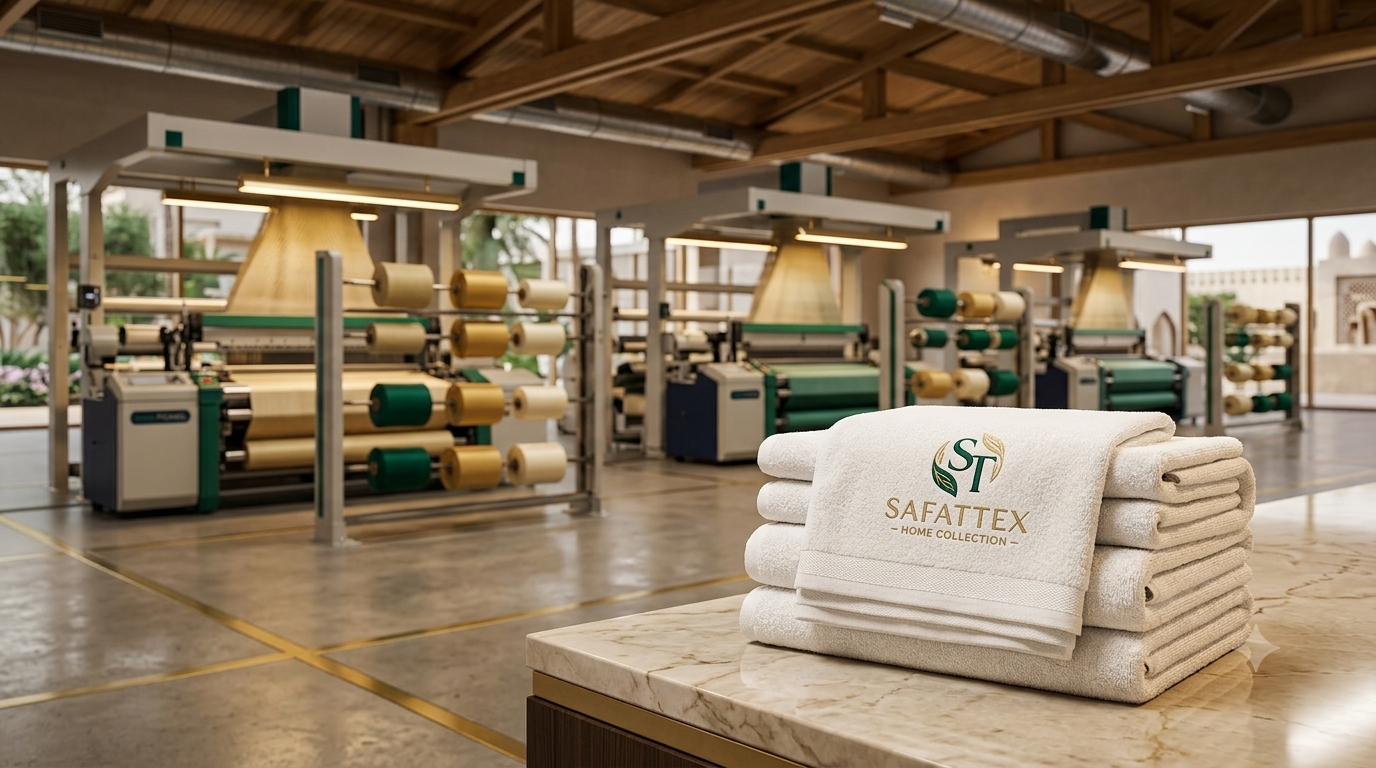
Terry fabric is woven on specialised rapier or air-jet looms. Unlike flat woven fabrics, terry fabric has loops on one or both sides formed by the pile warp threads being woven slack rather than tight. The density and height of these loops determines the towel's absorbency and GSM. Higher GSM means more loops per square centimetre — more cotton, more absorbency, more weight.
Dobby looms allow decorative weave patterns (such as herringbone or jacquard borders) to be woven directly into the fabric. This is how premium hotel towels achieve their distinctive bordered look without embroidery or printing.
Stage 4: Bleaching, Dyeing and Finishing
Greige (undyed) terry fabric undergoes wet processing. White towels are bleached using either a chlorine or peroxide process — peroxide bleaching is gentler on fibres and preferred by mills targeting OEKO-TEX certification. Coloured towels are dyed using reactive dyes, which bond chemically with the cotton fibre for colourfastness ratings that withstand commercial laundry conditions. The finishing process includes softening agents that enhance the initial hand feel, and often a tumble-drying stage to raise the pile and create the characteristic fluffy texture of new towels.
Stage 5: Cutting, Hemming and Border Attachment
Woven terry fabric comes off the loom in large rolls. It is then cut to the specified size tolerances and hemmed on all four sides to prevent fraying. The hem quality is a visible indicator of overall manufacturing standards — a tightly sewn, even hem suggests good process control across the factory. For private label products, woven label attachment happens at this stage.
Stage 6: Quality Inspection and Packing
Export-grade towels go through AQL (Acceptable Quality Level) inspection before packing. Inspectors check for weaving defects, uneven pile, colour consistency, size tolerance, and hem quality. The industry standard for most hospitality buyers is AQL 2.5, meaning a statistically sampled batch is accepted if the defect rate is below 2.5%. Third-party inspection companies such as SGS or Bureau Veritas are commonly used to verify quality before shipment.
What This Means for Buyers
Understanding the manufacturing process helps you ask better questions when evaluating suppliers. Ask whether yarn is ring spun or open-end spun. Ask whether the bleaching process is peroxide-based if you have OEKO-TEX requirements. Ask about the AQL level used during final inspection. A supplier who can answer these questions confidently is a supplier who understands and controls their own process.
SafatTex operates an integrated manufacturing facility in Pakistan covering spinning, weaving, dyeing and finishing under one roof. This vertical integration gives us direct quality control at every stage of the process described above. If you would like to understand how our manufacturing process applies to your specific product requirements, request a quote and we will walk you through it.