
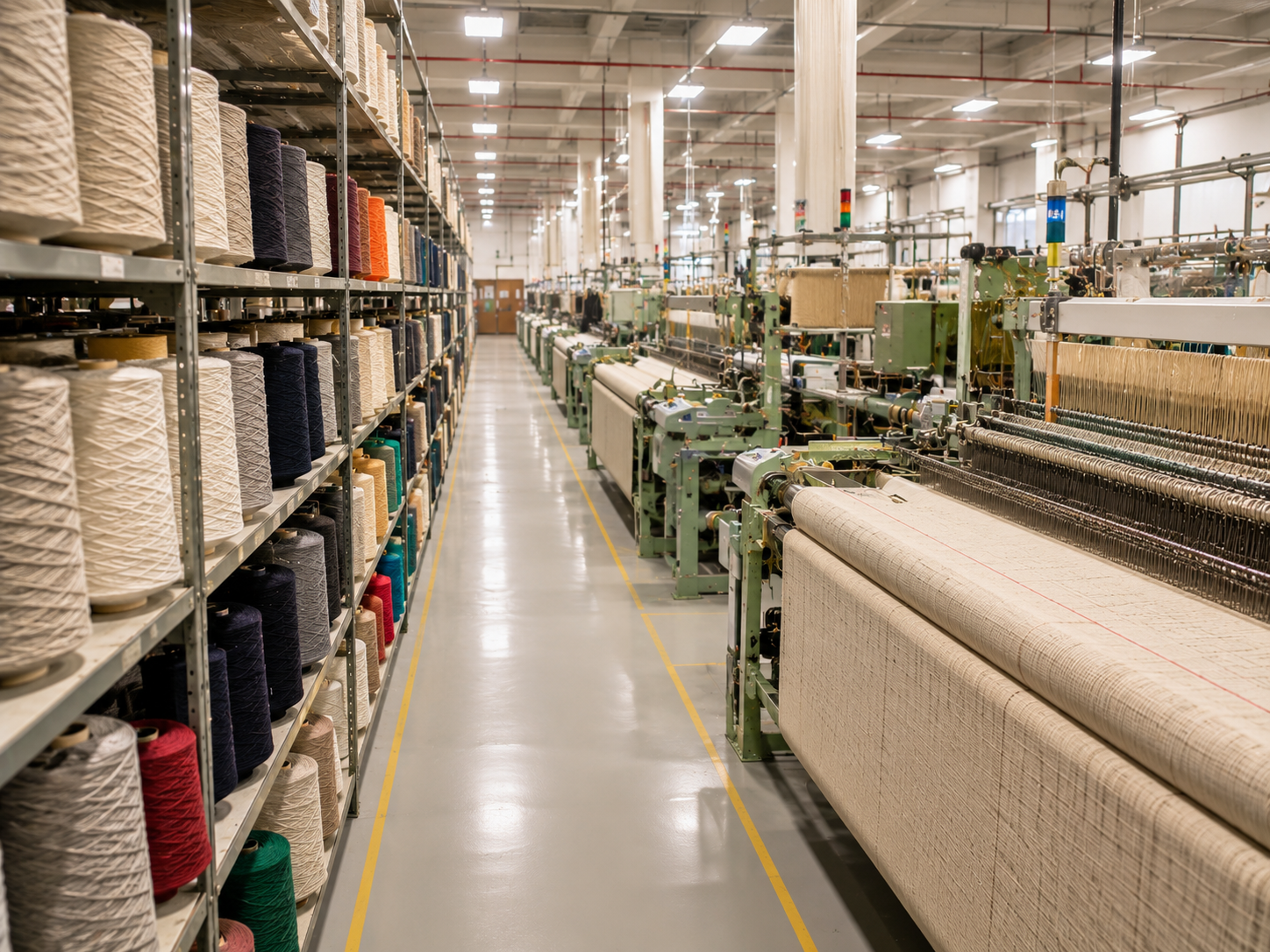
The cost of choosing the wrong textile supplier goes beyond the price of a bad shipment. It includes the time spent managing quality disputes, the reputational risk of delivering substandard product to your customers, and the opportunity cost of a disrupted supply chain. A structured evaluation process before your first order is the most effective way to avoid these outcomes. Here are the ten questions that experienced textile buyers use to qualify a new supplier.
1. Are you a manufacturer or a trading company?
This is the most important question to ask first. Manufacturers produce the goods in their own facility. Trading companies source from multiple factories and add a margin. Both have legitimate roles, but you need to know which you are dealing with. A manufacturer gives you direct control over quality and production process. A trading company may offer more product variety but less transparency. If you are told 'we are a manufacturer' but cannot be shown a factory address or production video, investigate further.
2. What certifications do you hold?
Ask for copies of current certifications (OEKO-TEX, ISO 9001, GOTS, Sedex). Then verify them independently using the verification tools described in our certifications guide. A supplier who cannot produce current, verifiable certificates for the certifications they claim is a risk.
3. Can you share reference customers in my market?
Asking for references in your specific market (hotel chains, retail brands, industrial distributors) tells you whether the supplier has experience with your type of buyer and product standards. A factory experienced only in commodity export may not understand the documentation, labelling, and quality requirements of a European hotel chain buyer. References do not need to be from direct competitors — they just need to be from buyers with similar requirements.
4. What is your production capacity and lead time?
Ask for monthly production capacity in metres or pieces. Then ask what percentage of that capacity is currently committed to existing orders. A factory running at 95% capacity will have a very different lead time reliability profile than one at 60%. Also ask what happens to your order if they take on a larger order after yours is placed — this reveals how they prioritise customers.
5. What is your standard AQL inspection process?
Quality control should happen throughout production, not only at final inspection. Ask how defects are identified and handled during weaving, dyeing and cutting. Ask whether they use inline inspection (checking during production) or only end-of-line inspection. Ask what AQL level they use for final inspection sampling. AQL 2.5 is the standard for most export-grade production; AQL 1.5 is appropriate for premium or branded product.
6. Do you accept third-party pre-shipment inspection?
A factory that refuses or discourages third-party inspection (SGS, Bureau Veritas, Intertek) is raising a red flag. Reputable manufacturers welcome third-party inspection because it reduces disputes and builds buyer confidence. The inspection is arranged and paid for by the buyer — a good factory should have no objection to it.
7. What are your payment terms for a first order?
Standard terms for a first order from a Pakistan manufacturer are typically 30% deposit by T/T on order confirmation, 70% balance against copy of Bill of Lading. Factories that ask for 100% upfront from a new buyer are an elevated risk. Factories willing to offer net-30 terms to a buyer they have not worked with before are also unusual — investigate their financial position. Established Letter of Credit terms are appropriate for larger orders once the relationship is established.
8. How do you handle production defects after delivery?
Ask about their documented process for handling claims. A professional factory will have a claim procedure: you notify within a specified window, provide photographic evidence of defects, and they offer credit, replacement or refund depending on the nature of the issue. A vague or evasive answer to this question is a warning sign.
9. Can you produce samples before production confirmation?
The answer should always be yes. Samples may carry a nominal cost (typically credited against the first order) but should be available. Be wary of any factory that asks you to confirm an order quantity before samples are produced and approved. This is not standard practice for quality-oriented manufacturers.
10. Who will be my point of contact during production?
Having a named account manager or production coordinator who handles your order is a sign of professional operation. Ask how they communicate order status updates — weekly reports, production photos, or on-request only. Ask how you reach them if there is a problem during production. The quality of communication during production is one of the strongest predictors of a smooth supply chain relationship.
SafatTex is a vertically integrated manufacturer in Pakistan. We welcome factory visits and third-party inspection, hold OEKO-TEX certification, and assign a dedicated account contact to every export buyer. If you are evaluating us as a supplier, we encourage you to ask all ten of these questions — and we will give you direct, verifiable answers.